The U.S. Food and Drug Administration has approved Lisraya (brepocitinib) tablets for adults with dermatomyositis, making it the first FDA-approved oral treatment specifically indicated for the disease.
The approval was announced on 27 August 2026 and is important because dermatomyositis is a rare autoimmune disorder that can damage both muscle and skin and has historically been treated with therapies that were not specifically approved for the condition.
Contents
- What dermatomyositis is
- How brepocitinib works
- What the phase 3 trial showed
- What the Total Improvement Score measures
- Safety and boxed warnings
- Why the approval matters
What dermatomyositis is
Dermatomyositis is an autoimmune disease in which the immune system attacks tissues in the skin and muscles.
The disease can cause progressive muscle weakness, characteristic inflammatory rashes and fatigue. Because skeletal muscles are needed for movement, swallowing and other functions, significant muscle inflammation can affect daily activities and, in some patients, more serious functions.
The term autoimmune means that immune pathways normally used to defend the body become misdirected toward the body's own tissues.
How brepocitinib works
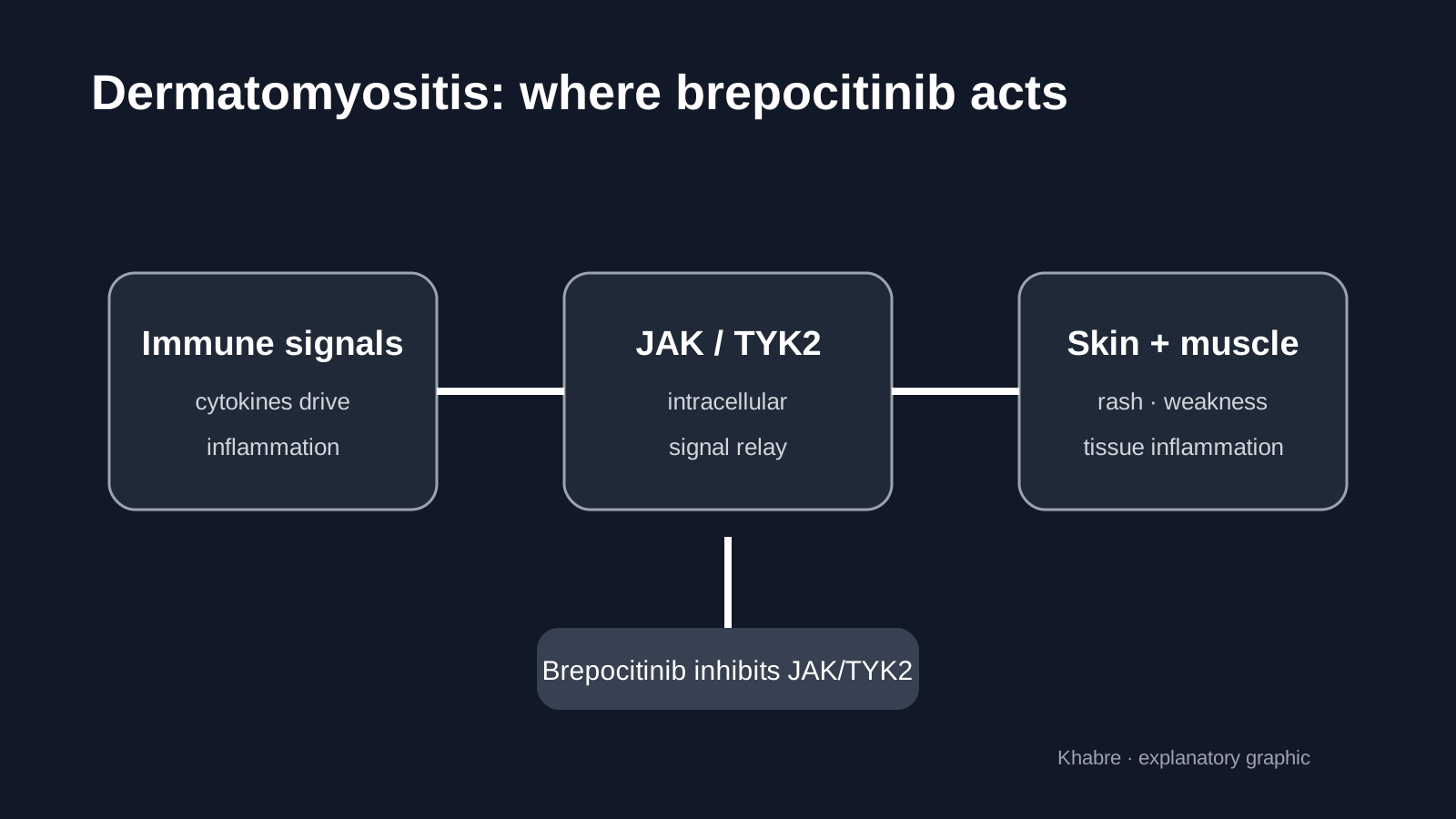
Brepocitinib is a once-daily oral inhibitor of Janus kinase and TYK2 signaling.
JAK and TYK2 proteins are part of intracellular signaling pathways used by several cytokines, which are chemical messengers that coordinate immune and inflammatory responses.
A useful analogy is a relay system: an inflammatory signal reaches the outside of a cell, and JAK-family proteins help pass that message inward. Blocking selected parts of the relay can reduce downstream inflammatory activity.
That does not switch off the immune system completely, but it can also create infection and other safety risks because the targeted pathways have normal immune functions.
What the phase 3 trial showed
The FDA says efficacy and safety were evaluated in a randomized, double-blind, multicenter, placebo-controlled phase 3 study involving 241 adults with dermatomyositis.
Participants received brepocitinib 30 mg once daily, brepocitinib 15 mg once daily or placebo for 52 weeks.
The FDA says the approved 30 mg dose produced a higher average Total Improvement Score at week 52 than placebo. Participants also showed improvements in physical function and skin disease activity and were more likely to reduce corticosteroid use by week 48.
These results establish efficacy for the approved indication; they do not mean every patient will respond or that the treatment is preferable to every alternative for every clinical situation.
What the Total Improvement Score measures
Dermatomyositis affects more than one organ system, so a single laboratory test cannot capture the whole disease.
The Total Improvement Score combines changes across six domains, including muscle strength, physical function, skin and other disease activity, muscle enzymes and both physician and patient global assessments.
A higher score therefore reflects improvement across several aspects of the illness rather than one isolated measurement.
Safety and boxed warnings
The FDA lists common adverse reactions including upper respiratory tract infection, headache, fatigue, urinary tract infection and nausea.
Importantly, brepocitinib carries a boxed warning covering serious infections, increased all-cause mortality, malignancies, major adverse cardiovascular events and thrombosis.
A boxed warning is the FDA's most prominent safety warning in prescription-drug labeling. It does not mean the drug should never be used; it means the risks require particularly careful clinical consideration.
The FDA reported treatment discontinuation due to adverse reactions in 6% of participants receiving the approved 30 mg dose, compared with 11% receiving placebo in the trial.
Why the approval matters
The main significance is not simply that another immunomodulator has reached the market. It is that adults with dermatomyositis now have an oral therapy specifically evaluated and approved for their disease.
That gives clinicians a labeled treatment option backed by a dedicated phase 3 program, while the boxed warnings underline why treatment decisions still need individualized risk-benefit assessment.
This article describes regulatory and scientific information and is not personal medical advice.
Primary source
- U.S. Food and Drug Administration. FDA Approves First Oral Drug Indicated to Treat Dermatomyositis in Adults. 27 August 2026. https://www.fda.gov/news-events/press-announcements/fda-approves-first-oral-drug-indicated-treat-dermatomyositis-adults