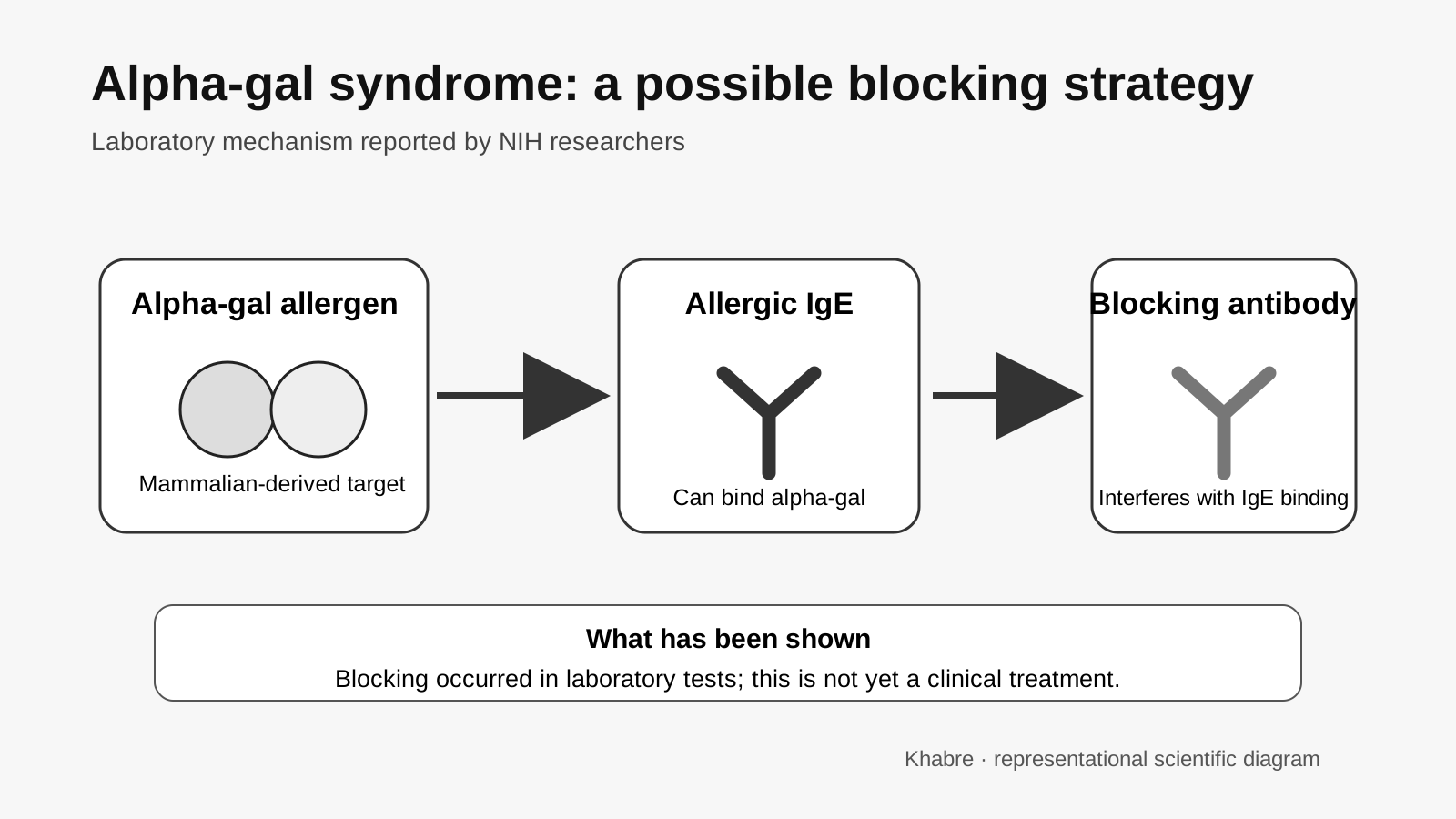
Researchers at the US National Institutes of Health have identified rare antibodies that may provide a starting point for developing a targeted treatment for alpha-gal syndrome, an unusual food allergy associated with tick bites.
The finding is important, but it is still early-stage research. The antibodies were tested in laboratory experiments, where they blocked human allergy-related antibodies from attaching to alpha-gal-containing allergens. NIH has not reported a clinical treatment based on the finding, and the result does not show that the antibodies can yet prevent allergic reactions in people.
Contents
- What alpha-gal syndrome is
- What the researchers found
- Why the antibodies are unusual
- What the laboratory result means
- What it does not mean
- Why this could matter
What alpha-gal syndrome is
Alpha-gal syndrome, or AGS, is an allergy to galactose-alpha-1,3-galactose, usually shortened to alpha-gal. Alpha-gal is a carbohydrate found in most non-primate mammals and therefore in foods and products derived from mammals.
Unlike many food allergies, which are reactions to proteins, alpha-gal syndrome is directed against a carbohydrate. It is also unusual because symptoms after eating mammalian meat can be delayed for several hours.
Tick bites are associated with development of the condition. In affected people, the immune system produces immunoglobulin E, or IgE, antibodies that recognize alpha-gal. When those IgE antibodies encounter the allergen, they can contribute to release of inflammatory mediators that cause hives, gastrointestinal symptoms, breathing problems or, in severe cases, anaphylaxis.
What the researchers found
NIH researchers reported rare antibodies that bind alpha-gal in a way that can interfere with allergic IgE antibodies.
In laboratory testing, the antibodies acted as a biological shield: they blocked human allergy-associated antibodies from binding alpha-gal-containing red-meat allergens.
The discovery emerged from malaria research rather than from a programme designed specifically to treat alpha-gal syndrome. That is scientifically interesting because it suggests that naturally occurring antibody responses generated in one biological context may reveal ways to control a different immune problem.
Why the antibodies are unusual
Antibodies can recognize the same target in different ways. Two antibodies may both bind alpha-gal but attach to different molecular features or approach the target from different angles.
That matters because a useful blocking antibody does not merely recognize the allergen. It must occupy or shield the relevant structure strongly enough to prevent the disease-driving IgE antibody from engaging it.
The NIH result therefore suggests a possible strategy: rather than broadly suppressing the immune system, future therapies might more selectively interfere with the allergen-IgE interaction.
What the laboratory result means
The experiments establish a biological mechanism that is plausible enough to investigate further.
A successful blocking effect in laboratory assays can support development of therapeutic antibodies, antibody fragments or other molecules designed around the same binding principle. Researchers would then need to determine how durable the effect is, how the candidate behaves in living organisms and whether it can be given safely at a useful dose.
Clinical development would also have to address whether such an intervention could protect against the range of alpha-gal exposures that occur through food, medicines and other mammalian-derived products.
What it does not mean
The finding is not evidence that alpha-gal syndrome has been cured.
NIH explicitly describes the antibodies as having potential to inform an intervention. Laboratory blocking of allergen binding is several steps removed from demonstrating prevention of allergic reactions in people.
People with diagnosed alpha-gal syndrome should therefore not change avoidance measures or emergency plans on the basis of this research report.
Why this could matter
Current management largely depends on avoiding triggering exposures and treating reactions when they occur. A targeted therapy that directly interrupts the allergen-IgE interaction would represent a fundamentally different approach.
The study also illustrates how immunology can produce unexpected connections. Antibodies discovered while investigating malaria may help researchers understand how to neutralize an allergy-associated carbohydrate.
The next important questions are whether the blocking antibodies can work safely in living systems, how long protection might last and whether the mechanism can be translated into a practical medicine.
Primary sources
- National Institutes of Health. NIH researchers identify rare antibodies with potential to combat alpha-gal syndrome. 1 September 2026. https://www.nih.gov/news-events/news-releases/nih-researchers-identify-rare-antibodies-potential-combat-alpha-gal-syndrome