Summary
AMD says its 6th Gen EPYC 9006 “Venice” server CPU portfolio is designed for the varied CPU workloads created by agentic AI systems. The company reports performance gains across enterprise, cloud-native and high-performance computing tests, while identifying several figures as preliminary estimates.
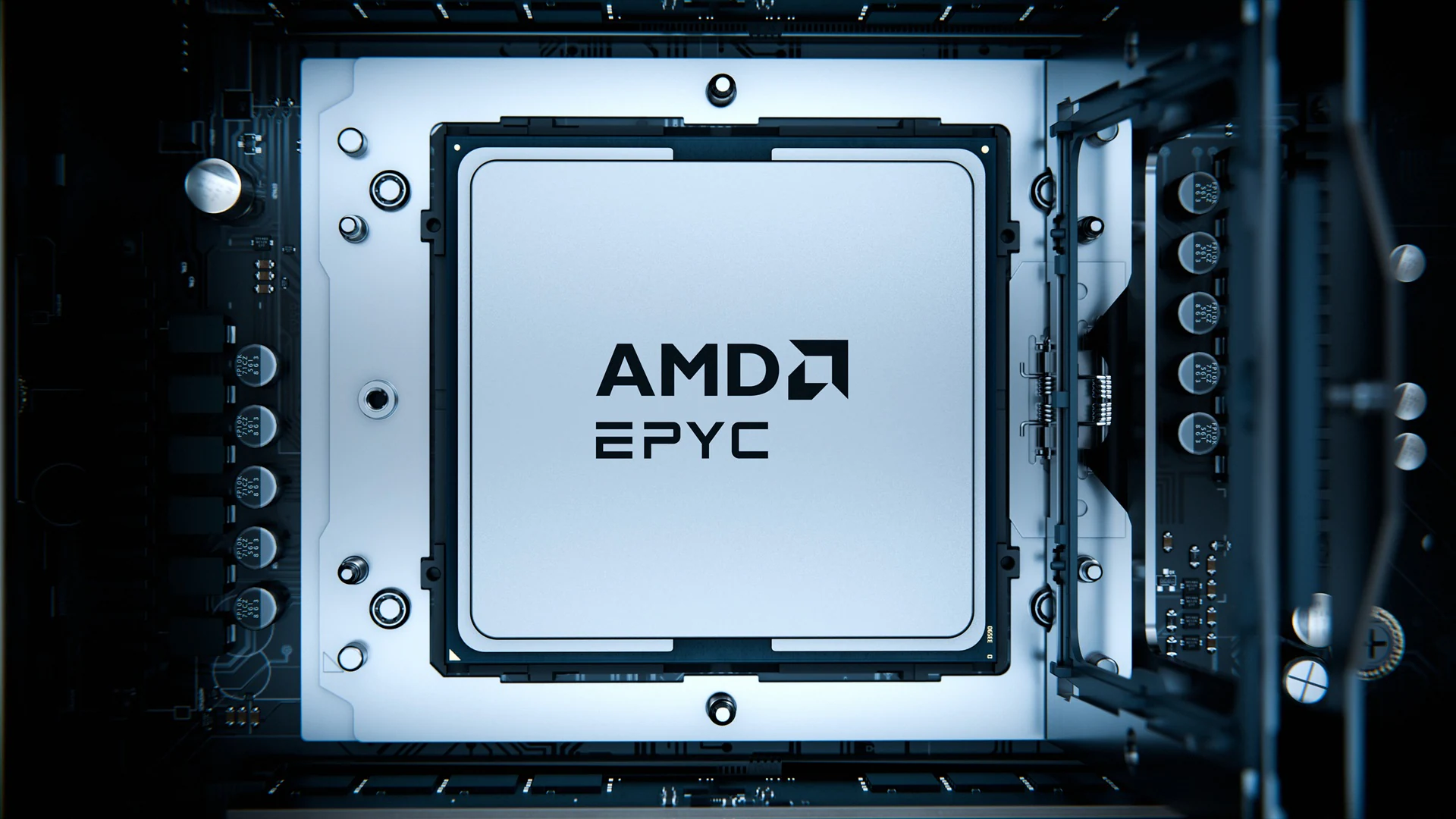
AMD has outlined a new EPYC server CPU portfolio aimed at the changing demands of agentic AI systems, where one request can trigger a sequence of retrieval, tool calls, code execution and result processing. The company says its 6th Gen AMD EPYC 9006-series CPUs, code-named “Venice”, are in production and span several processor profiles rather than a single design for every workload.
AMD’s announcement on September 18, 2026, describes four CPU families built on a common software foundation. The portfolio ranges from 8-core edge deployments to 256-core flagship processors and rack-scale AI host nodes. Major OEM platforms are scheduled to launch, according to AMD, while leading cloud providers are expected to begin deployments later in the year.
Why agentic AI changes CPU requirements
Traditional infrastructure planning often separated workloads such as databases, web services, analytics, virtualisation, technical computing and AI. Agentic systems can bring several of those workload types into one execution path. The amount and location of required compute can therefore change from one request to the next.
That makes both single-threaded responsiveness and large-scale parallel throughput relevant. A CPU with strong loaded per-core performance can help latency-sensitive operations finish quickly, while a high core count can run more concurrent tasks and increase throughput at rack level. AMD’s approach is to offer different processor profiles for different stages or services while keeping them within a common software environment.
This is a systems-design proposition rather than a claim that every agentic workload has the same performance characteristics. The suitable processor will still depend on the software, memory configuration, concurrency and other infrastructure choices involved.
AMD’s reported benchmark results
AMD says a new white paper evaluates the 6th Gen EPYC 9006 family across general-purpose, enterprise, cloud-native, AI and high-performance computing workloads. In the company’s SPECrate 2026 Integer testing, the EPYC 9996 is reported to deliver 1.2 times the per-core performance of an NVIDIA Vera-based platform and 2.24 times its platform-level performance.
For enterprise and cloud-native workloads, AMD reports gains ranging from 2.4x to 3.7x across tests including server-side Java, OpenSSL, MongoDB, Redis, NGINX and transaction processing. In the detailed comparisons, the EPYC 9996 is reported to provide up to 3.7x the NGINX request throughput and up to 3.5x the MongoDB throughput of the tested Intel Xeon 6980P system. AMD also reports up to 2.9x Redis request throughput and up to 2.6x MySQL transaction-processing throughput in its configurations.
For scientific and engineering workloads, AMD reports performance advantages of 1.8x to 3.13x over the Intel Xeon 6980P across molecular dynamics, materials modelling and weather forecasting. The cited tests include GROMACS, NAMD, Quantum ESPRESSO and the WRF weather model. In a separate model constrained to a 100-kilowatt rack, AMD estimates that a system based on EPYC 9996 processors can deliver 3.4 times the throughput of a Vera-based platform.
The figures are company-reported results from AMD testing, analysis or engineering projections. Several comparisons use different processor configurations, memory technologies, compilers and software environments, and the Vera and rack-level figures are identified as preliminary estimates. AMD also notes that results can vary with system configuration, firmware, operating environment and tuning.
The immediate significance of the announcement is the breadth of the CPU portfolio. As AI systems become more dependent on multi-step workflows, AMD is positioning EPYC 9006 as a way to match processor capacity to individual infrastructure roles instead of sizing an entire fleet around one fixed workload profile.