Summary
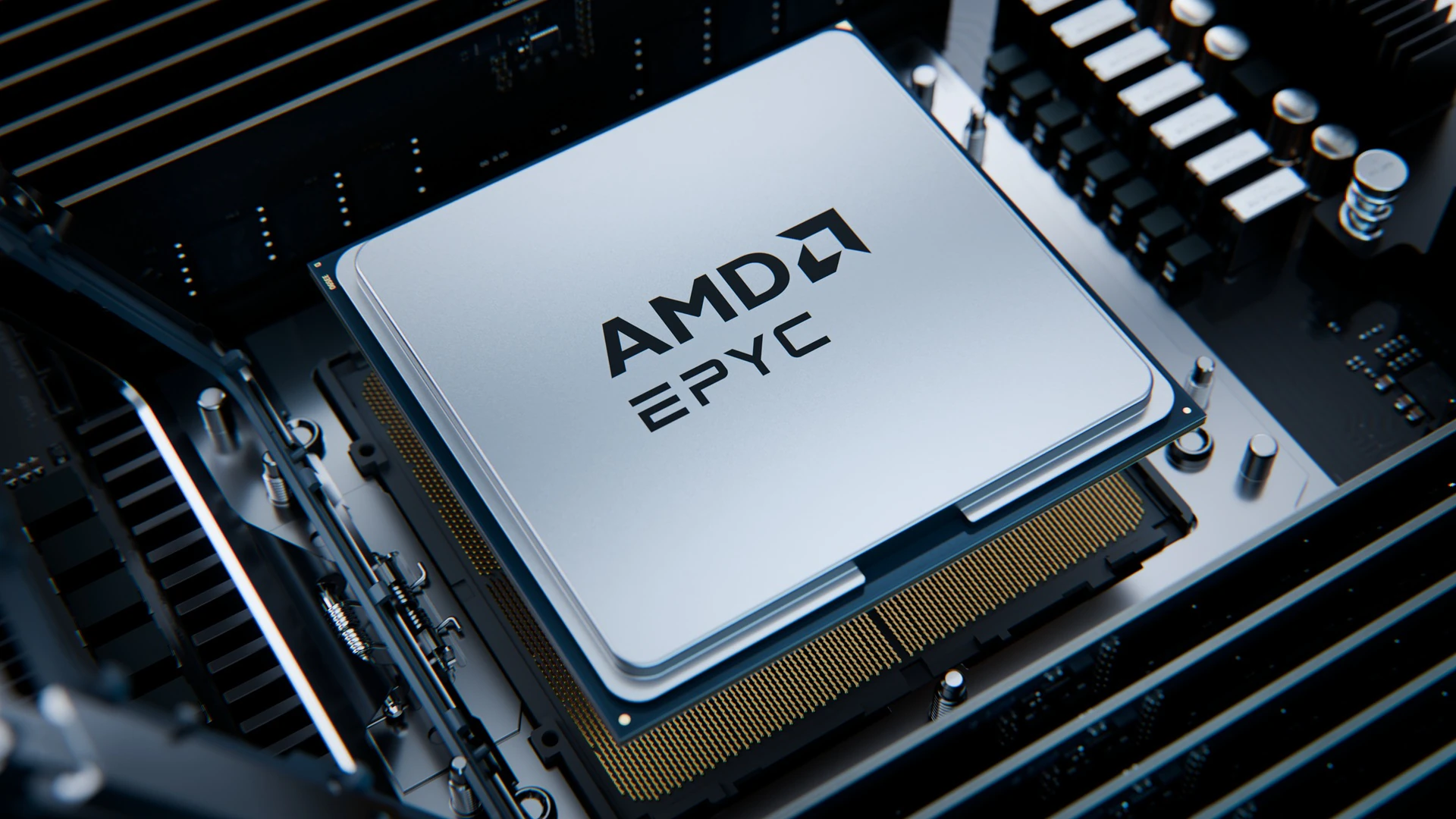
AMD has announced general availability of its Zen 6-based 6th Gen EPYC SP7 server processors. Systems are shipping from leading server vendors, while some cloud services using the processors are in preview or planned.
AMD announced general availability of its 6th Gen EPYC SP7 server processors on November 10, 2026. Based on the company’s Zen 6 architecture, the processors are designed for a range of data-centre workloads, including enterprise computing, cloud services and infrastructure supporting AI. Systems powered by the new CPUs are shipping from leading server vendors, AMD says.
Why CPUs still matter in AI infrastructure
AI workloads are not limited to the calculations that run a model. An agent-based workflow may also retrieve information, execute code, access databases and coordinate calls to models. Those activities rely on general-purpose computing alongside any specialised accelerators used for model processing.
AMD describes three CPU roles in this infrastructure: general-purpose services, host nodes for GPU-based systems, and agent sandboxes, where separate agents can run in isolated environments. Its 6th Gen EPYC range is intended to offer processors optimised for these different jobs while retaining a common software, security and operational foundation.
That portfolio approach reflects a practical data-centre challenge: workloads differ in how much processing capacity, frequency, bandwidth and power they need. Matching processors to those jobs can help operators plan capacity across existing services and newer AI deployments. That is the rationale AMD gives for offering multiple workload-focused processors rather than treating every server task as the same kind of computing.
Server shipments and cloud services
AMD says 6th Gen EPYC-based platforms are shipping from leading server vendors. Meta is working with AMD as a lead customer and has been validating platforms based on the processors as the companies prepare for deployment at scale.
Microsoft Azure has put Azure HDv2 into preview for AI data processing, agentic AI and high-performance computing. Azure HXv2 is intended for electronic design automation and technical computing. AMD also cited Azure ND MI455X v7, based on its Helios rack-scale system, for production-scale AI inference.
Oracle Cloud Infrastructure’s planned Compute E7 instances will use 6th Gen EPYC processors for enterprise applications and CPU services surrounding AI models. AMD said cloud instances from Azure and OCI were coming soon; the Azure HDv2 preview is a specific service status, not a claim that every planned cloud instance is generally available.
The announcement moves AMD’s new server CPU generation into vendor systems and selected cloud previews, giving data-centre operators routes to evaluate it in real deployments. AMD’s performance comparisons and estimates are company-reported, and the release notes that results can vary with workload and system configuration.