Summary
BMW says its 2027 electric i3 50 xDrive will start at $61,500 in the US, $4,400 below the gasoline M350 xDrive. That comparison is between the electric model and the gasoline range-topper: the entry-level 330 starts at $49,900.
BMW has priced its 2027 electric i3 50 xDrive at $61,500 in the US—$4,400 below the gasoline-powered 2027 M350 xDrive, which starts at $65,900. Those are base MSRPs before a required $1,350 destination and handling charge. The comparison is with BMW’s most powerful gasoline 3 Series at launch, not its entry-level gasoline model: the 330 starts at $49,900.
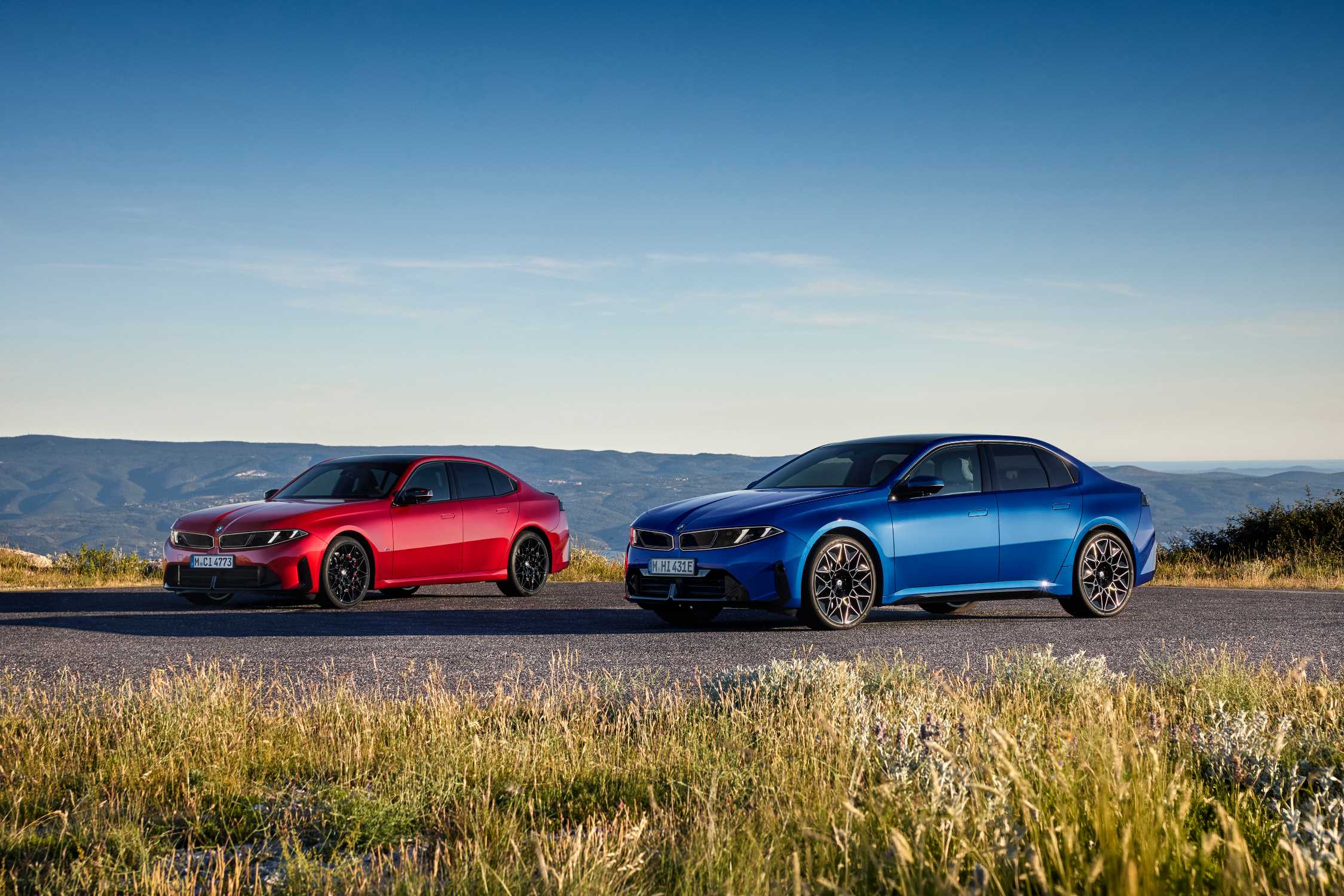
The eighth-generation 3 Series, announced by BMW on September 29, 2026, brings electric and gasoline models under a shared design while offering different powertrains. BMW says differences in their vehicle architectures mean the models also vary slightly in dimensions and wheelbase.
How the prices and performance compare
The launch lineup includes the gasoline 330 at $49,900, 330 xDrive at $51,900 and M350 xDrive at $65,900, alongside the electric i3 50 xDrive at $61,500. Adding the same required destination charge puts the i3 at $62,850 and the M350 at $67,250; the $4,400 gap remains. Against the 330, however, the electric model costs $11,600 more before that charge.
BMW rates the i3 50 xDrive at 463 hp, with an electric motor at each axle and a 0–60 mph time of 4.5 seconds. The M350 xDrive has a 437-hp, 3.0-liter inline-six with 48V mild-hybrid technology and an eight-speed transmission; BMW gives its 0–60 mph time as 3.9 seconds. The electric model has the higher stated output, while the gasoline flagship has the quicker stated acceleration time.
The electric i3’s range and charging system
The i3 50 xDrive is the first fully electric 3 Series built on BMW’s Neue Klasse architecture. BMW estimates a range of 446–468 miles, based on preliminary BMW AG testing using EPA test procedures. It uses the company’s sixth-generation eDrive technology, an 800-volt system and newly developed cylindrical battery cells measuring 46 millimetres in diameter and 95 millimetres high. BMW says those cells provide 20% greater volumetric energy density than the prismatic cells used in its Gen5 batteries.
The battery uses a cell-to-pack design, integrating cells without separate modules. BMW says this raises energy density at pack level while reducing weight and cost. The i3 can DC fast-charge at up to 400 kW; BMW says it can add 191–208 miles of range in 10 minutes. It also supports bidirectional charging: with the relevant equipment, the car can power external devices at up to 3.7 kW or supply power to a home.
The price gap therefore depends on which gasoline model is used for comparison. BMW’s announcement puts the electric i3 below its gasoline performance flagship, but above both four-cylinder gasoline models in the launch range.