Summary
BMW’s new 3 Series introduces the all-electric i3 Neue Klasse alongside petrol models with 48V mild-hybrid technology. The i3 50 xDrive is rated for up to 912 km of WLTP range, while the range also includes the six-cylinder M350 xDrive.
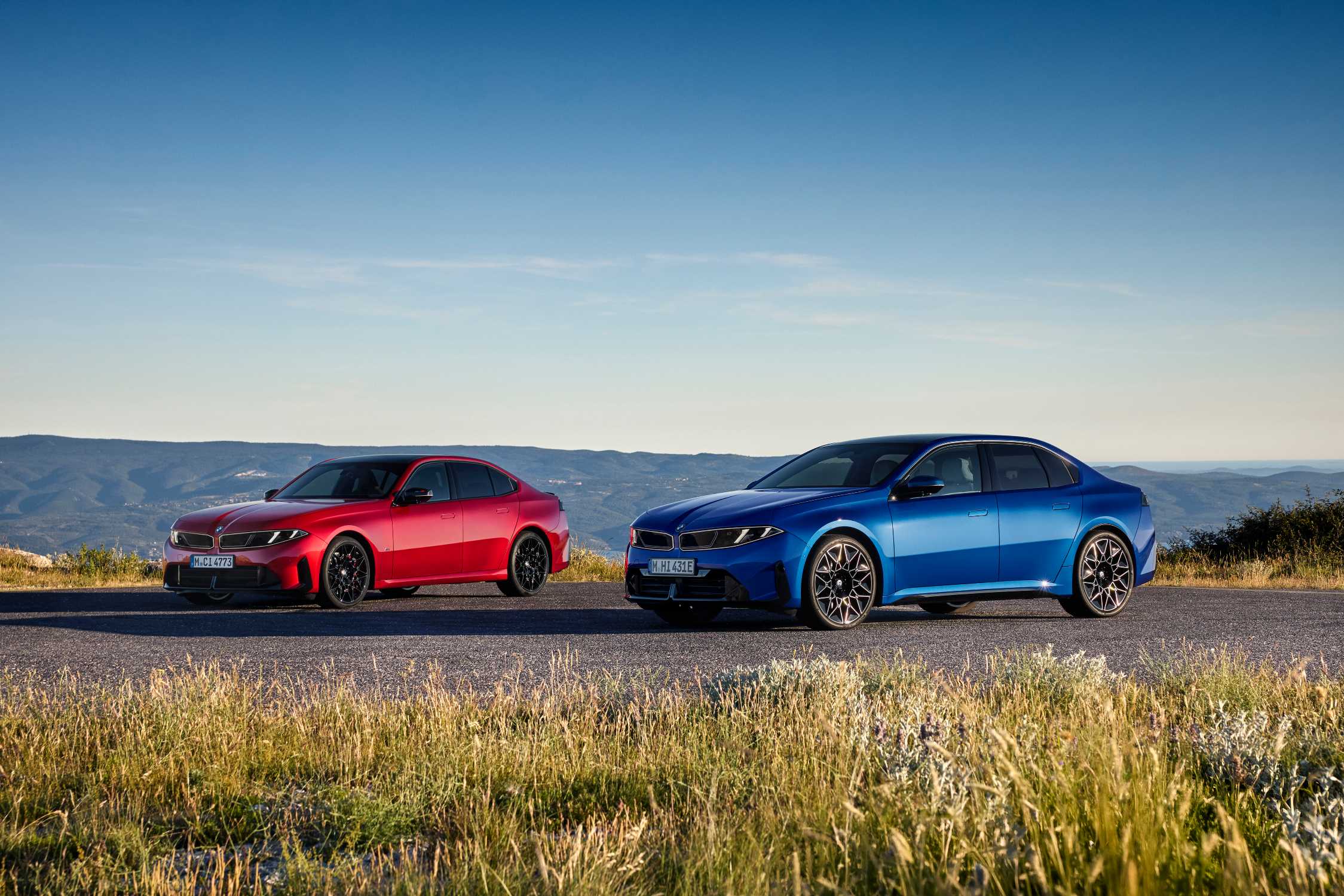
BMW has introduced a new 3 Series range that brings the model into its Neue Klasse era with the fully electric i3. The launch line-up is set to include two electric models, while petrol variants with 48V mild-hybrid technology will also be offered. BMW says a plug-in hybrid will join the range over the coming year.
The electric i3’s headline figure is a maximum WLTP range of 912 km for the i3 50 xDrive. BMW also describes a new battery and drive-system architecture, faster charging and a central computer intended to coordinate driving dynamics. These additions sit alongside a cabin built around the company’s latest display and operating system.
Contents
- Electric and combustion models
- A new electric platform and driving system
- Digital cabin and driver assistance
Electric and combustion models
Both electric launch versions use one motor on each axle. The i3 50 xDrive has a 108.7 kWh high-voltage battery and a system output of 345 kW (469 hp), with peak torque of 645 Nm. BMW quotes a 0–100 km/h time of 4.7 seconds and a maximum range of 912 km (567 miles) under the WLTP test procedure.
The second version, the i3 40 xDrive, has an 82.8 kWh battery and a stated output of 275 kW (374 hp). Its maximum WLTP range is 710 km (441 miles). BMW says the i3 50 xDrive can add enough energy for up to 423 km (263 miles) of driving in ten minutes at a DC charging rate of up to 400 kW. That charging-time figure assumes a station able to supply the maximum power; the actual result depends on factors including battery temperature and charge level.
The combustion line-up includes four-cylinder petrol variants and the M350 xDrive. The latter uses a 3.0-litre, six-cylinder petrol engine with a 48V mild-hybrid system, and produces 326 kW (443 hp). BMW gives its 0–100 km/h time as 4.1 seconds and its electronically governed top speed as 250 km/h (155 mph). A plug-in hybrid is planned for the coming year, according to the announcement.
A new electric platform and driving system
The i3 uses BMW’s sixth-generation eDrive technology, or Gen6. BMW describes the system as combining new high-voltage batteries with cylindrical cells, electric motors, 800V technology and bidirectional charging. The company says this generation offers longer range and faster charging than its predecessor.
A central element is the “Heart of Joy” computer. BMW says it brings drive-system and driving-dynamics functions together in one control unit for the Neue Klasse electric architecture, and operates ten times faster than previous systems. The intention is to coordinate the electric car’s driving responses through a consolidated control system. BMW says the combustion models use a separate Driving Stack tailored to their powertrains.
The M350 xDrive also gets a feature called Drift Moment. Activated through the central display, it sends engine power to the rear wheels, according to BMW.
Digital cabin and driver assistance
The new 3 Series adopts BMW Panoramic iDrive, paired with BMW Operating System X. Its interface combines a panoramic projection across the lower windscreen, an optional 3D head-up display, a 17.9-inch central touchscreen and multifunction steering-wheel controls. BMW says the system uses touch, haptic and voice interactions, with the Intelligent Personal Assistant among the voice-control options.
BMW says the range will offer standard and optional driver-assistance systems, including SAE Level 2 functions. Its Motorway Assistant is described as enabling hands-free driving at up to 130 km/h in 21 countries by the end of 2026. These features are assistance systems for partially automated driving, rather than a replacement for driver responsibility.
BMW’s quoted range and consumption figures use the WLTP procedure and refer to the German market. The company notes that real-world range can vary with conditions such as load, driving style, route, weather, climate-control use, tyres and battery condition.