Summary
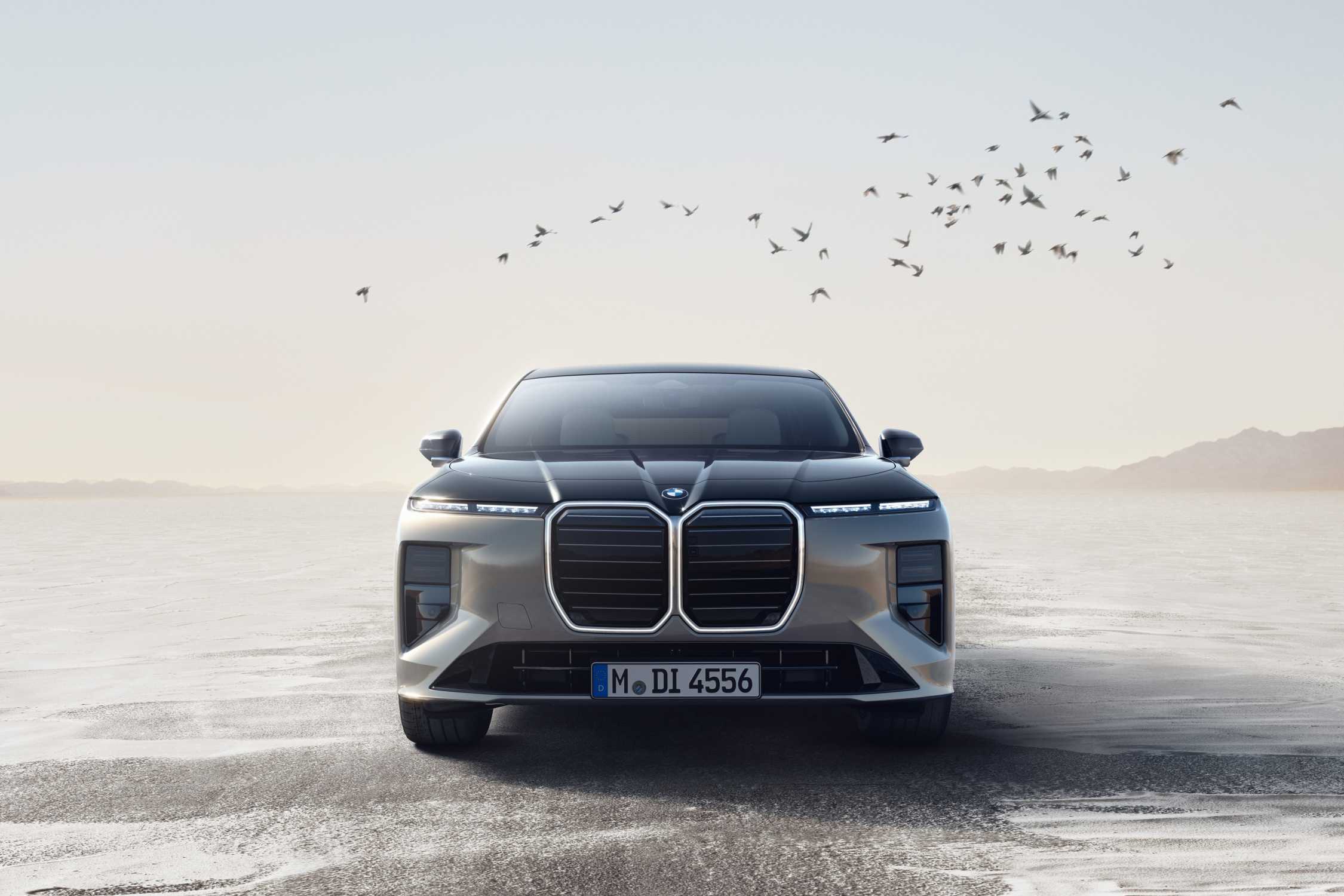
BMW unveiled an extensively updated 7 Series on 22 April 2026, adding Neue Klasse technology to its luxury sedan. The company says fully electric versions will offer more than 720 km of WLTP range.
BMW unveiled its extensively updated 7 Series on 22 April 2026, bringing technologies from its Neue Klasse programme into the luxury sedan. The manufacturer says the fully electric versions will offer more than 720 kilometres of range under the WLTP test procedure, helped by cylindrical cells from its sixth-generation BMW eDrive system. Production and the worldwide market launch are scheduled to begin from July 2026.
BMW describes this as the most extensive update it has made to the 7 Series. The model remains available with combustion engines, plug-in hybrid systems and fully electric powertrains. The company says the update is also the start of a wider rollout of Neue Klasse technologies across its existing models.
New cabin technology and a longer-range electric version
The cabin introduces BMW Panoramic iDrive, running BMW Operating System X, and a BMW Passenger Screen, which BMW says is standard. An optional BMW Theatre Screen is intended for rear-seat entertainment, including 8K streaming, gaming and video calls. The announcement also lists smartphone integration, BMW Maps navigation, the BMW Digital Key Plus and regular over-the-air software updates.
BMW says its electric versions now exceed 720 km of WLTP range. WLTP is a standardised vehicle test procedure; actual range varies with driving conditions and equipment. The announcement links the increased range in part to sixth-generation eDrive cylindrical cells, but does not give a battery capacity or a more specific range figure for each electric variant.
The drive-system line-up includes 48-volt mild-hybrid combustion engines, two plug-in hybrid variants and fully electric models. BMW names the 740d xDrive and the new 740 xDrive, alongside the i7 60 xDrive and M760e xDrive in its published figures. The company says three M Performance models will be offered. Its consumption and emissions figures are marked provisional and not yet officially confirmed.
Driver assistance and production plans
The updated sedan uses SAE Level 2 driver-assistance systems. BMW says its Motorway Assistant permits hands-off driving at up to 130 km/h in numerous European countries, while a City Assistant can support navigation-guided journeys between addresses in urban areas. Level 2 systems can assist with driving tasks, but the driver remains responsible for supervising the vehicle. The announcement also describes AI-supported parking-space detection and manoeuvre planning.
Adaptive two-axle air suspension with electronically controlled shock absorbers is standard, according to BMW. Optional chassis systems add Integral Active Steering, with a further option also including roll stabilisation.
All drive-system variants are to be built on one production line at BMW Group Plant Dingolfing in Germany. BMW says production and the worldwide market launch will follow from July 2026. A digital interior mirror is scheduled to be introduced with production in November 2026, so that feature is due later than the stated production start.