Summary
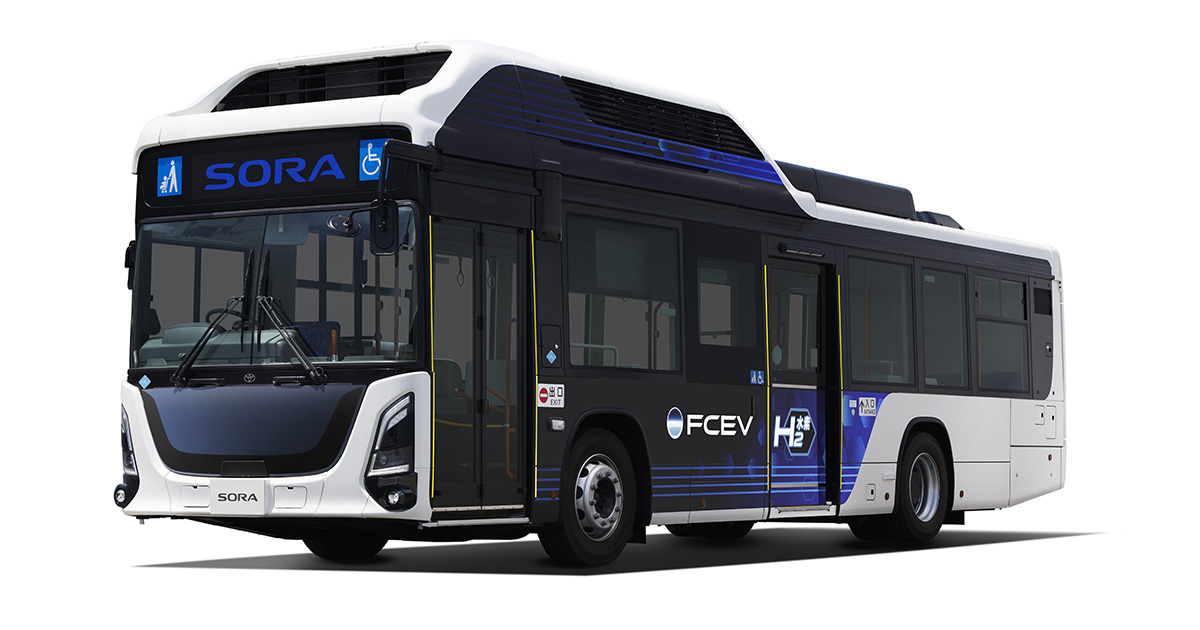
Toyota has launched a new Sora hydrogen fuel-cell route bus, jointly developed with Isuzu. Toyota reports a range above 300 km and a full-flat passenger floor, with range and refuelling figures based on company measurements.
Toyota announced the launch of its new Sora fuel-cell route bus on Oct. 5, 2026. Developed jointly with Isuzu Motors, the bus combines Isuzu’s battery-electric full-flat route-bus platform with Toyota’s fuel-cell system. Toyota says the updated design improves range, passenger access and operator usability compared with the first-generation Sora, launched in 2018.
A fuel cell generates electricity from hydrogen through an electrochemical reaction, rather than burning fuel in an engine; an electric motor then provides propulsion. The bus also has a lithium-ion propulsion battery. Hydrogen’s climate impact over its full energy chain depends in part on how it is produced, so using a fuel cell does not by itself determine the vehicle’s overall emissions.
Range and refuelling
Toyota says more efficient use of the fuel cell and large-capacity battery has improved fuel efficiency. Compared with the first-generation Sora, the new bus has about 20% less total hydrogen tank capacity while extending cruising range by about 100 km, to more than 300 km. These are Toyota reference figures; actual range can vary with temperature, traffic, passenger load and air-conditioning use.
For the urban model, Toyota lists three high-pressure hydrogen tanks with a nominal pressure of 70 MPa and a total tank volume of 471 litres. The model’s fuel-cell stack has a maximum output of 113 kW. Its AC induction motor has a maximum output of 220 kW and maximum torque of 970 N·m.
Toyota estimates a full hydrogen refuelling takes about 10 minutes, with actual time affected by factors such as station capacity and ambient temperature. The bus meets a new high-speed filling standard; Toyota says refuelling could take about half as long when compatible hydrogen stations are deployed. The release does not give a deployment schedule for those stations.
Safety and passenger access
The Sora is offered in four variants: two for urban use and two for suburban use, with different seating layouts. The urban model has a stated capacity of 70 people: 19 seated passengers, 50 standing passengers and one crew member. Its step-free, full-flat floor is intended to make movement through the passenger compartment easier, including for wheelchair users and people with strollers.
An optional one-touch wheelchair securement system is intended to help passengers board and alight and help drivers secure wheelchairs. Toyota says the option will be available to order from around April 2027.
For driver safety, the bus links an Emergency Driver Stop System with a Driver Status Monitor. If the system detects a problem with the driver, it decelerates and stops the vehicle, then applies the parking brake. A front blind-spot monitor alerts the driver to pedestrians and bicycles ahead. The bus can also supply power for emergency use when connected to an external power-supply unit.