Summary
Waymo says it is working with Singapore’s Ministry of Transport and Land Transport Authority to prepare an all-electric autonomous ride-hailing service. The company plans local operations in the coming months, a readiness phase in 2027 and an intended public launch through the Waymo app in 2028.
Waymo announced on September 17, 2026 that it is preparing to bring its fully autonomous, all-electric commercial ride-hailing service to Singapore. The company says it is working with Singapore’s Ministry of Transport and Land Transport Authority, with a public launch through the Waymo app planned for 2028.
The announcement describes an intended expansion rather than an immediate service opening. Waymo’s roadmap begins with local operations and vehicle preparation, followed by manual driving and system adaptation before autonomous rides are offered to the public.
A phased route to a 2028 launch
Waymo says an initial fleet of all-electric Jaguar I-PACE vehicles will arrive in Singapore in the coming months as it establishes local operations. During a readiness phase in 2027, trained autonomous specialists will conduct initial manual driving while the company adapts its Waymo Driver system to Singapore’s road geometry, monsoon weather patterns and other local conditions.
The company intends to begin public commercial service in 2028. Waymo describes regulatory approvals, engagement and collaboration as necessary parts of bringing autonomous technology to a new city. The sequence places local operational preparation and adaptation before rider service begins.
Singapore’s transport minister, Jeffrey Siow, described Waymo as the country’s newest autonomous-vehicle operator. According to the announcement, Singapore expects the partnership to create new transport options while strengthening its autonomous-mobility ecosystem and generating new capabilities and jobs.
Connecting autonomous cars with public transport
Waymo says the Singapore service is intended to complement, rather than replace, the city’s public-transit network. One focus is first- and last-mile connectivity: trips that connect residential or commercial areas with mass-transit stations. The company says more than one-third of its riders in San Francisco are picked up or dropped off near transit stations.
The proposed fleet will be fully electric, which Waymo says supports Singapore’s Green Plan 2030 by avoiding direct vehicle emissions and potentially reducing dependence on private car ownership. At its current scale, the company estimates that its fleet prevents 480 metric tonnes of carbon dioxide from road travel each week.
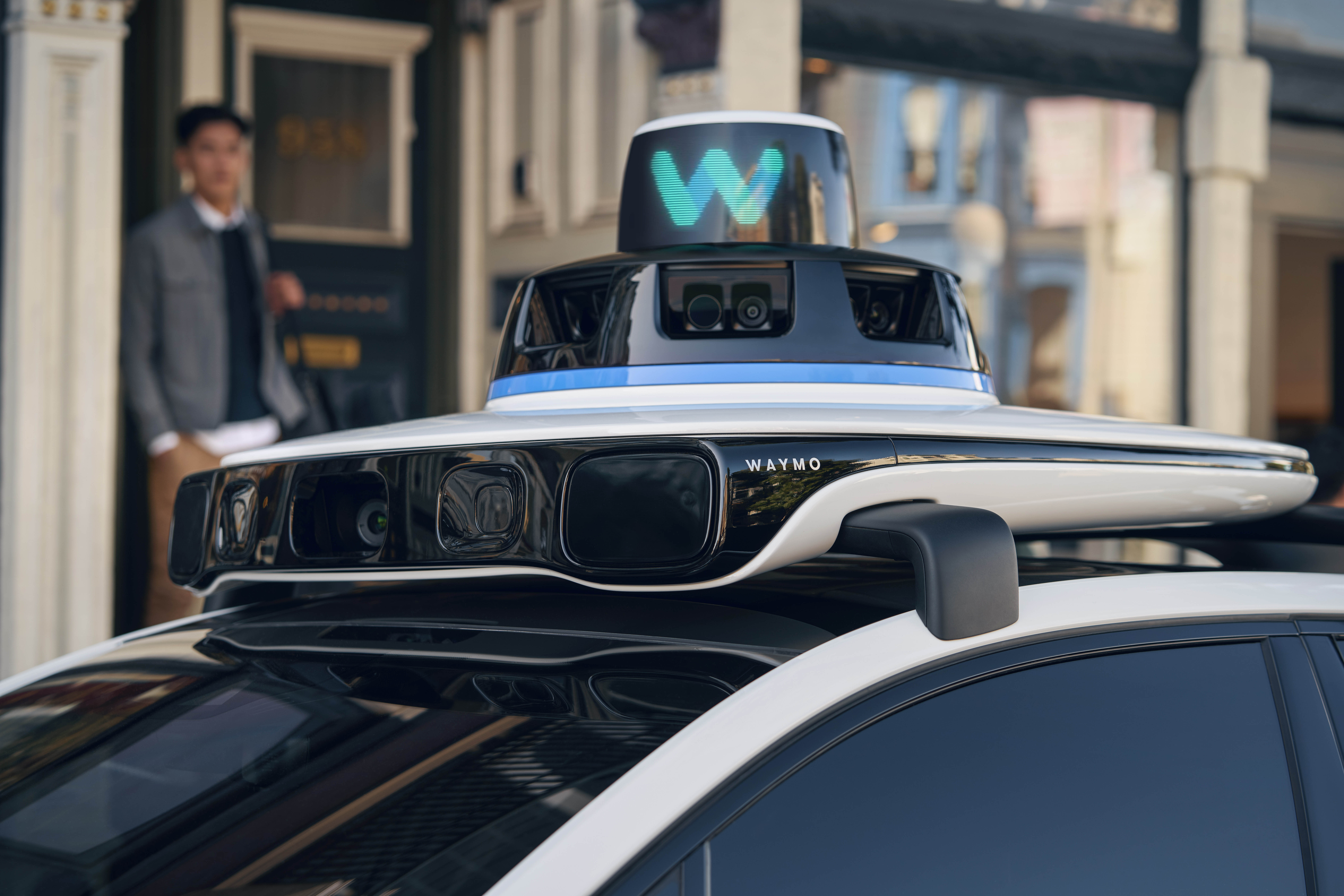
Waymo also highlights interactions with pedestrians, cyclists and other active-mobility users. Its autonomous vehicles use a sensor suite combining lidar, radar and cameras to provide a 360-degree view and to detect and predict movement around the vehicle. The company says the system is designed to support cautious and predictable behaviour on dense urban streets.
Waymo reports that it has provided more than 20 million fully autonomous rides and driven more than 300 million fully autonomous kilometres. It also reports a 94% reduction in injury-causing crashes compared with human drivers in the U.S. cities where it operates fully autonomously. Those figures describe the company’s existing U.S. operations; Singapore remains in the preparation and readiness stages of the announced roadmap.