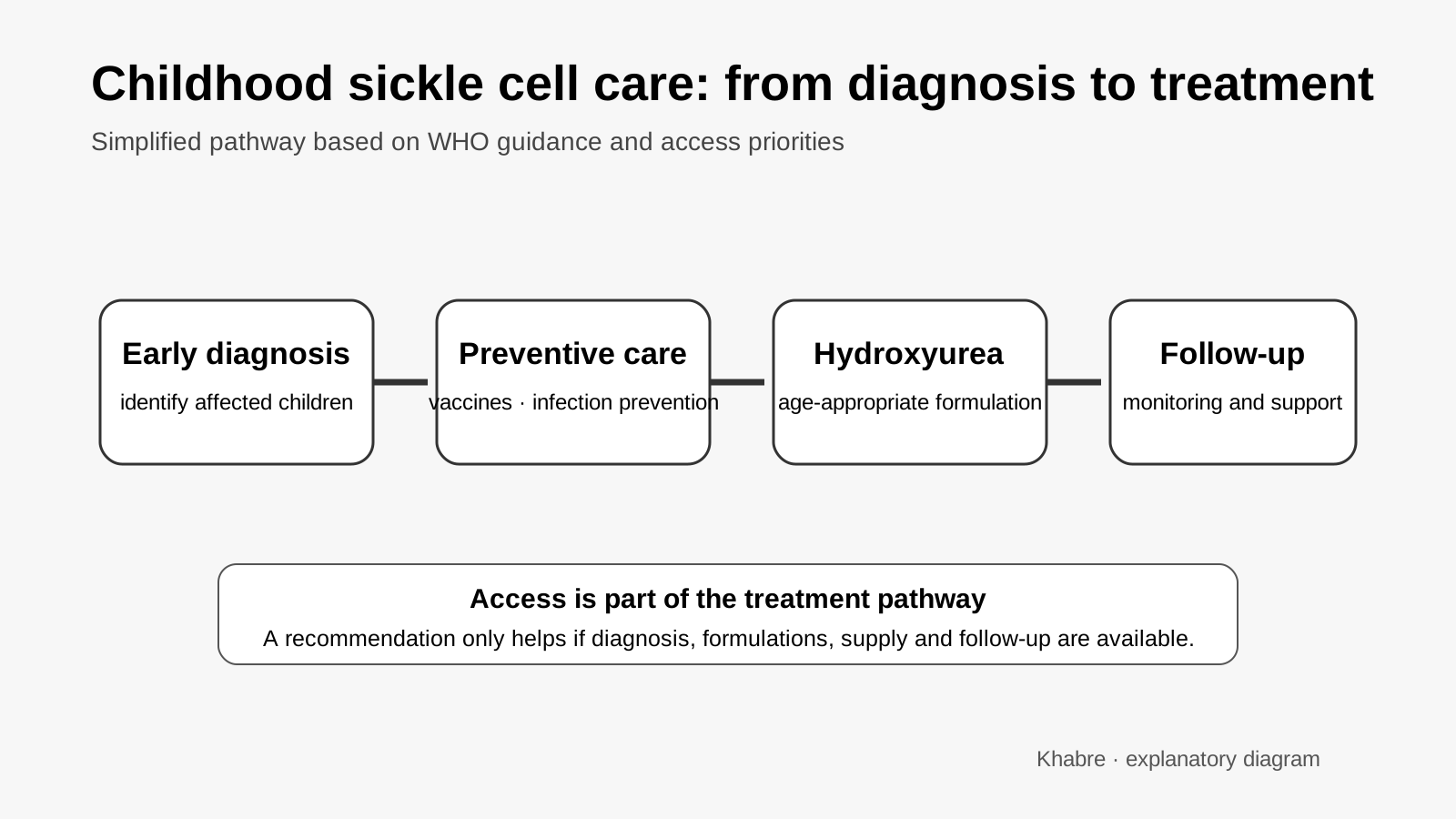
The World Health Organization is trying to close a persistent gap in childhood sickle cell care by connecting clinical guidance with medicine development, procurement and access.
WHO says sickle cell disease contributed to an estimated 81,100 deaths among children under five in 2021, with nearly 80% of cases occurring in sub-Saharan Africa. Many of those deaths occur despite the availability of interventions that can reduce complications.
The organisation's current work focuses particularly on hydroxyurea, a disease-modifying medicine that can reduce painful crises and other complications when used appropriately.
Contents
- What sickle cell disease does
- What WHO now recommends
- Why hydroxyurea matters
- Why child-friendly formulations matter
- The access problem
- What happens next
What sickle cell disease does
Sickle cell disease is an inherited disorder of haemoglobin, the protein in red blood cells that carries oxygen.
A change in the beta-globin gene leads to production of haemoglobin S. Under certain conditions, haemoglobin S molecules can polymerise, causing red blood cells to become rigid and distorted.
Those abnormal cells can break down prematurely and obstruct small blood vessels. The result can include anaemia, severe pain episodes, infections, stroke and damage to multiple organs.
Because the disease begins at birth, early diagnosis and preventive care can substantially change a child's long-term outlook.
What WHO now recommends
In May 2026, WHO published its first normative guideline specifically covering diagnosis, prevention and clinical management of sickle cell disease in children and adolescents aged 0–19 years.
The guideline contains 15 recommendations across seven priority areas.
One of the strongest recommendations is use of hydroxyurea for all children and adolescents with sickle cell anaemia from 9 months to 19 years of age, regardless of clinical severity.
That recommendation reflects a shift away from reserving disease-modifying treatment only for children who have already developed frequent severe complications.
Why hydroxyurea matters
Hydroxyurea increases production of fetal haemoglobin, or HbF.
Fetal haemoglobin is the form of haemoglobin that predominates before and shortly after birth. It interferes with polymerisation of haemoglobin S, which helps red cells remain more flexible.
By increasing HbF and affecting several other blood-cell pathways, hydroxyurea can reduce vaso-occlusive pain episodes, acute chest syndrome and other complications.
It is not a cure, and treatment requires appropriate prescribing and monitoring, but its benefits are well established.
Why child-friendly formulations matter
A guideline can recommend a medicine without ensuring that a child can actually receive it in the right dose.
Young children may be unable to swallow adult tablets or capsules. Weight-based dosing also changes as a child grows.
WHO's Paediatric Drug Optimization work identified hydroxyurea as an immediate priority and informed a Target Product Profile published in July 2026. The profile describes preferred and minimum characteristics for paediatric hydroxyurea formulations, including dosage form, strengths, dosing flexibility, stability, packaging and affordability.
The aim is to make formulations suitable for resource-limited settings rather than assuming that adult products can simply be adapted locally.
The access problem
Sickle cell care requires more than a medicine.
Children need diagnosis, vaccination, infection prevention, clinical follow-up, laboratory monitoring and access to emergency care when complications occur.
WHO says major inequities remain in early diagnosis, comprehensive care and disease-modifying treatment. Those gaps are especially important in high-burden countries where health systems may have limited laboratory capacity and medicine supply chains.
The organisation is therefore linking its clinical guideline to prequalification, product-development priorities and procurement work.
What happens next
WHO says implementation will require coordination among governments, manufacturers, regulators, funders, procurement agencies, clinicians, researchers and affected communities.
Its forthcoming OneSCD Global Partnership and the Global Accelerator for Paediatric formulations are intended to help translate guidance into actual access.
The key measure of success will not be publication of additional recommendations. It will be whether more children are diagnosed early, receive an appropriate formulation of hydroxyurea when indicated, and remain connected to comprehensive care over time.
Primary source
- World Health Organization. WHO moves to expand access to lifesaving sickle cell treatment and care for children. 1 September 2026. https://www.who.int/news/item/01-09-2026-who-moves-to-expand-access-to-lifesaving-sickle-cell-treatment-and-care-for-children