Summary
A model that represents broad grounding zones matched historical satellite data more closely than models that omit them. In some simulations, it projected as much as twice the glacier’s current sea-level contribution estimates.
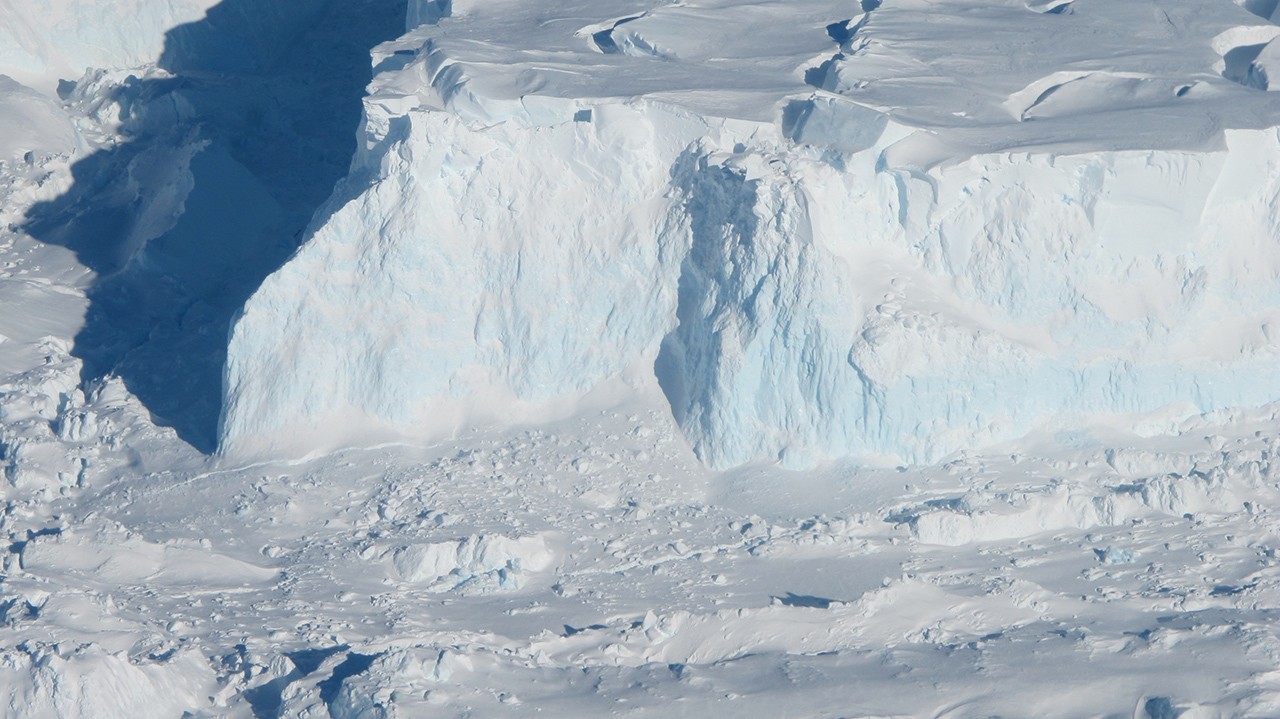
A study using a computer model developed by NASA’s Jet Propulsion Laboratory, the University of California, Irvine, and Dartmouth College finds that Antarctica’s Thwaites Glacier could contribute more to sea-level rise by the end of the century than some earlier estimates suggest. In some simulations, the projected contribution was as much as twice current projections, according to JPL. The study was published Oct. 12 in Nature Communications.
Thwaites is already a major contributor to global sea-level rise, but its long-term impact is difficult to project. The model focuses on a part of the glacier’s underside where ice transitions from resting on land to floating in the ocean—a region that can affect how quickly the glacier retreats.
Why the grounding zone matters
Ice-sheet models commonly represent this transition as a grounding line: a distinct boundary between grounded and floating ice. The new model instead represents a grounding zone, a broader area where seawater can penetrate several miles beneath ice that remains grounded.
Tidal cycles can lift the ice in this zone. The process brings warmer seawater into contact with grounded ice, accelerating melting and potentially destabilising the glacier. Representing this area as a zone rather than a single boundary allows the model to account for those interactions.
JPL says the model reproduced historical satellite data dating back to the 1990s four times more closely than models that leave out grounding zones. That closer match to past observations is the basis for the researchers’ view that the approach could provide more reliable information about glacier dynamics.
What the revised projections indicate
The study’s results suggest that accounting for grounding zones can materially change estimates of Thwaites’ future contribution to sea level. The reported increase is not the same across every simulation: JPL says some runs produced contributions as much as twice current projections.
Improved glacier modelling matters to coastal regions most exposed to rising seas because projections inform how those areas assess future impacts. The study’s historical-data comparison supports the grounding-zone approach, while its range of future outcomes shows that Thwaites’ contribution is still represented through model projections rather than one fixed result.