
science
JAXA’s MMX Mission Launches to Study Phobos and Deimos
JAXA’s Martian Moons eXploration mission lifted off on an H3 rocket on 20 October 2026. It is planned to investigate Phobos and Deimos, collect a sample from Phobos and return to Earth.
Search articles by title, topic or section.
Khabre desk
Recent reporting, analysis and explainers from the Space Science desk.
science
JAXA’s Martian Moons eXploration mission lifted off on an H3 rocket on 20 October 2026. It is planned to investigate Phobos and Deimos, collect a sample from Phobos and return to Earth.
science
JAXA’s MMX mission is targeting an October 2026 launch to study Mars’ moons and return a sample from Phobos. NASA is contributing a composition-measuring instrument, sampler technology, communications support and scientific expertise.
science
NASA is contributing a science instrument, sample-collection technology and communications support to JAXA’s MMX mission to study Mars’ moons and return a sample from Phobos. The spacecraft is targeting launch on Oct. 19, 2026, with sample return planned for 2031.
science
ESA astronaut Sophie Adenot has returned to Europe after 237 days, 5 hours and 18 minutes in space. Her εpsilon mission set a European record for the longest single spaceflight and included three spacewalks.
science
Solar Orbiter traced a large magnetic switchback in the solar wind to hot magnetic loops at the Sun. The findings point to interchange reconnection at its origin, with waves and turbulence influencing its later movement through space.
science
NASA’s six-satellite SunRISE radio astronomy mission is targeting launch no earlier than mid-2027. Flying slightly above geosynchronous orbit, the satellites will work together to track radio bursts from the Sun’s corona.
science
NASA’s Curiosity rover captured a six-image dawn panorama of wind-carved cliffs on Mount Sharp. Mission scientists hope to reach the yardangs in 2027 and investigate how the distinctive layer formed.
science
NASA selected three payload suites to investigate lunar hazards, possible underground lava tubes, ice and surface conditions. The planned investigations are intended to inform science and operational planning for a sustained presence on the Moon.
science
ESA says Juice’s 28 September 2026 Earth flyby bent its path by 20° and increased its velocity by 3.5 km/s. The encounter also gave the mission teams an opportunity to test and calibrate science instruments in space.
science
NASA has selected PRIMA to enter Phase B, advancing plans for a far-infrared space telescope designed to survey the universe. The mission is targeted to launch in 2033, pending further development and review.
science
NASA’s Perseverance rover found that the Margin Unit in Jezero Crater records at least three separate episodes of water-rock interaction, including a later episode involving heated underground water. The findings revise the picture of how water moved through early Mars.
science
An analysis of wrinkles across Mercury’s cratered surface suggests that the planet’s diameter has decreased by around 23 kilometres since it formed. The finding offers new constraints on how Mercury’s interior evolved over roughly 4.5 billion years.
science
NASA will host a free International Observe the Moon Night event on Sept. 19 at its Goddard Space Flight Center Visitor Center in Maryland. People worldwide can also participate through local observations, virtual events and other activities.
science
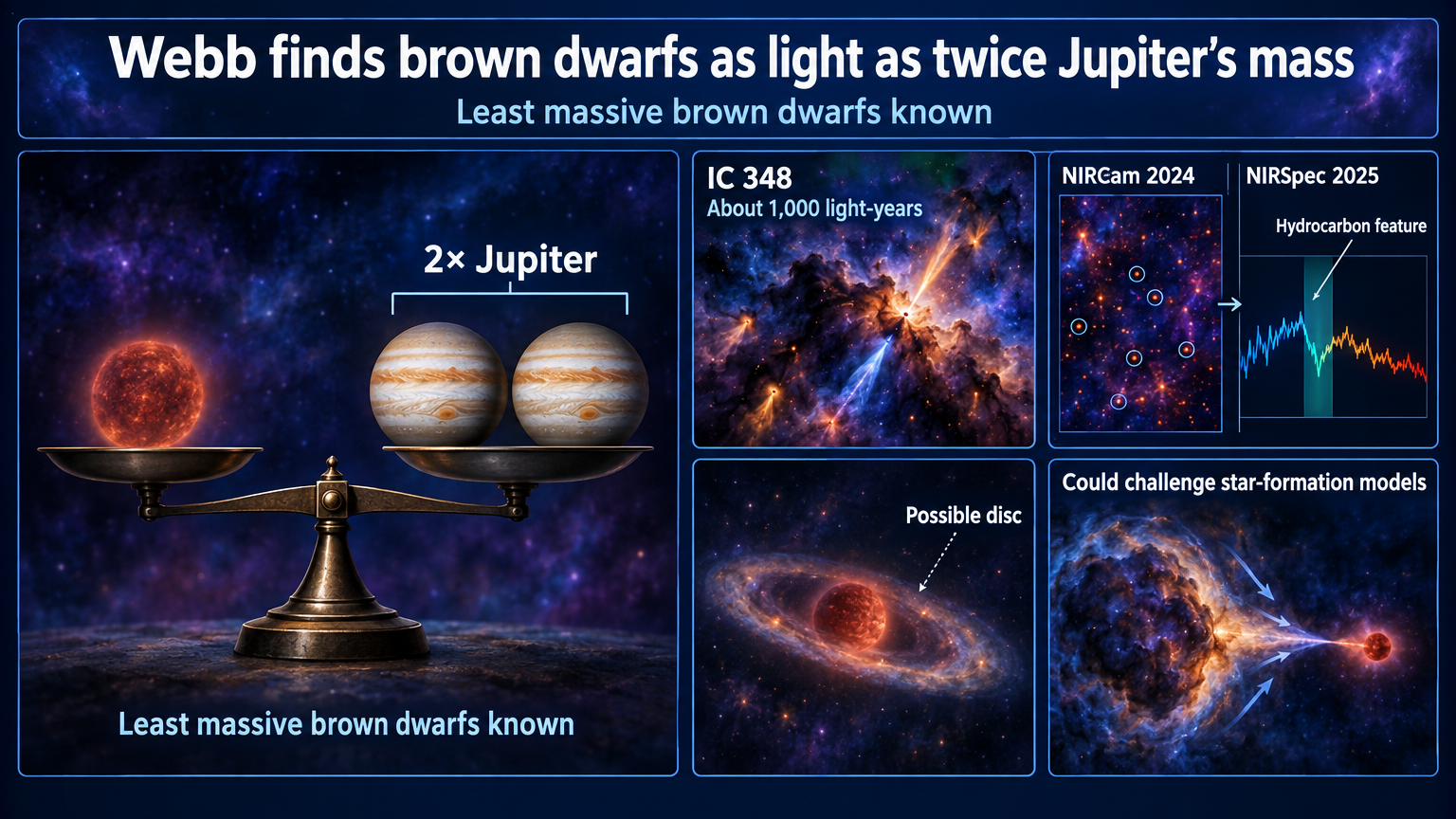
The James Webb Space Telescope has identified brown dwarfs in the star-forming region IC 348 with masses as low as twice that of Jupiter. The objects are the least massive brown dwarfs known and could challenge models of how stars form.
science
ESA’s FLEX Earth Explorer satellite and the Copernicus Sentinel-3C satellite have reached orbit after launching together on a Vega-C rocket from French Guiana. FLEX will measure plant fluorescence linked to photosynthesis, while Sentinel-3C will extend monitoring of oceans, land, ice and the atmosphere.
science
NASA’s Curiosity rover has discovered an unusually extensive field of polygonal fractures in a Martian valley. Scientists are studying whether the honeycomb-like patterns formed through drying, temperature changes or processes that compressed ancient sediments.
science
NASA engineers have redesigned Voyager 2’s power use so that three science instruments can continue operating in interstellar space for at least one extra year. The change addresses the spacecraft’s steadily declining electrical supply after almost half a century in operation.
science
NASA’s Nancy Grace Roman Space Telescope launched aboard a SpaceX Falcon Heavy on Aug. 30, beginning its three-month journey to its final orbit. The mission will study dark matter, dark energy and exoplanets while testing a coronagraph designed for future direct imaging of Jupiter-like planets.
science
NASA held two virtual workshops with Artemis Accords signatories on making lunar science data more interoperable, reproducible and accessible. NASA presented its Planetary Data System and related tools as a working model, but no common framework or adoption target has yet been announced.
science
A 2026 arXiv preprint proposes that the unusually energetic long gamma-ray burst GRB 220101A involved two supernova-related events separated by 3.5 seconds.
science
ESA expects to launch the FLEX photosynthesis mission and Copernicus Sentinel-3C together on Vega-C flight VV30 from French Guiana on 14 September 2026.
science
ESA says the MTG-I2 weather satellite launched on 27 August 2026 aboard Ariane 6, completing the initial three-satellite Meteosat Third Generation system and preparing the mission for faster weather and atmospheric observations after commissioning.
science
ESA says Euclid has identified 31 quasars from the early Universe, including two at redshifts 7.77 and 7.69—the most ancient quasars yet observed.
science
ESA reports that Euclid has identified 31 quasars from the early Universe, including two with redshifts of 7.77 and 7.69 that were observed when the Universe was about 670 million years old.
science
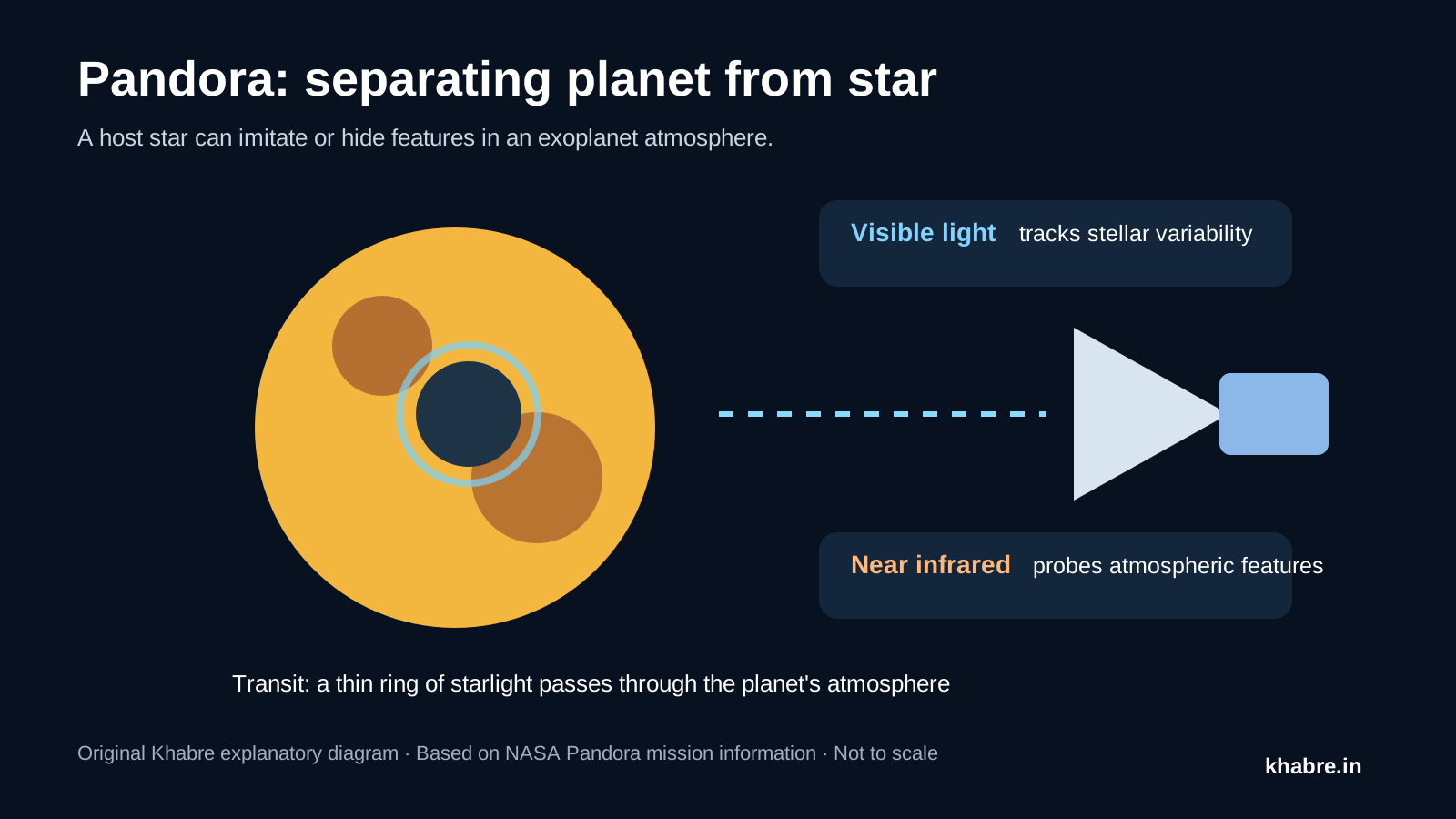
NASA's Pandora mission has begun science observations aimed at separating exoplanet atmospheric signatures from changes in their host stars, with at least 20 planets planned for detailed study.
science
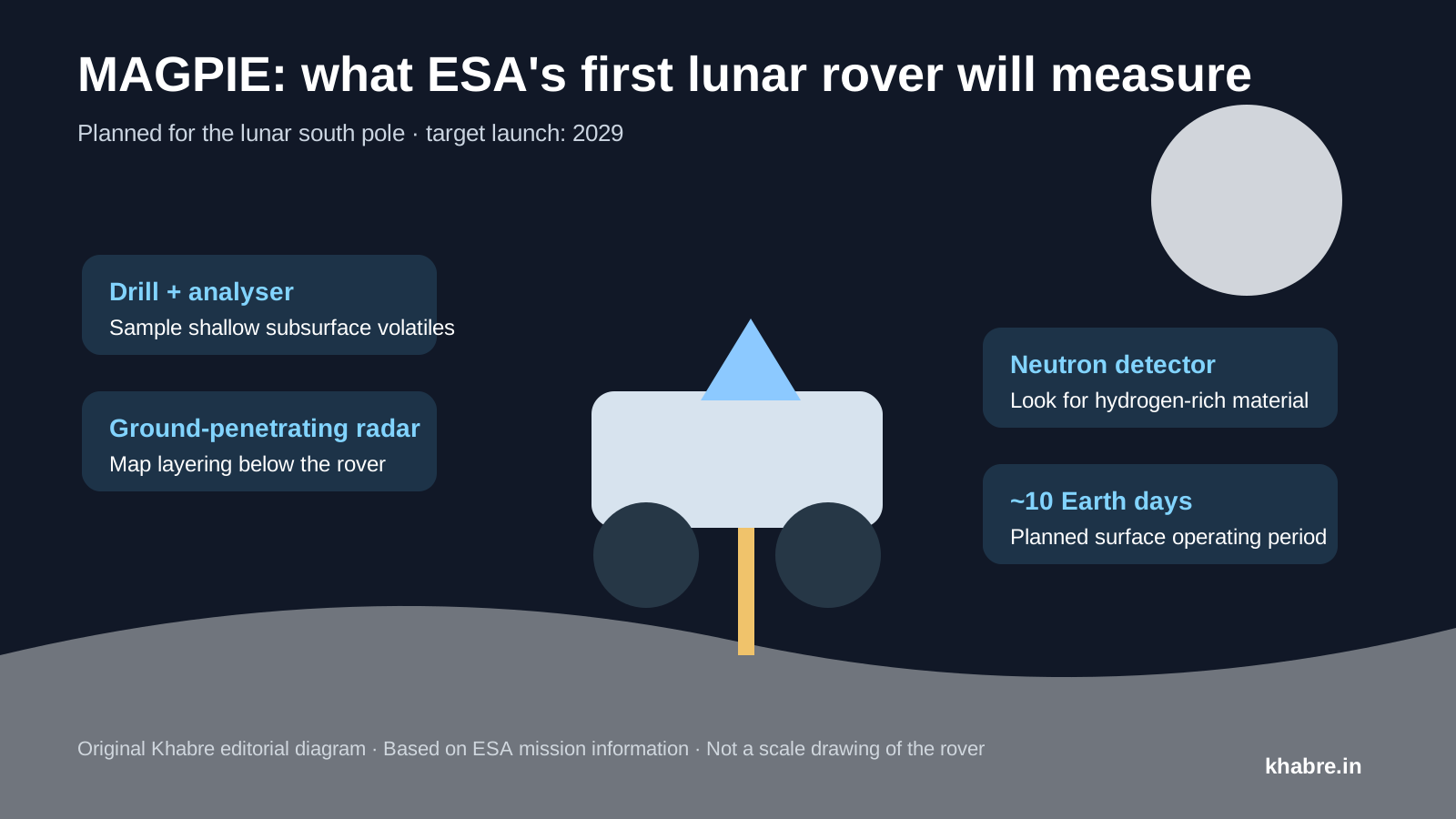
ESA's MAGPIE rover is planned to fly to the lunar south pole in 2029 with a drill, analyser, radar and neutron detector to study water, volatiles and subsurface geology.
science
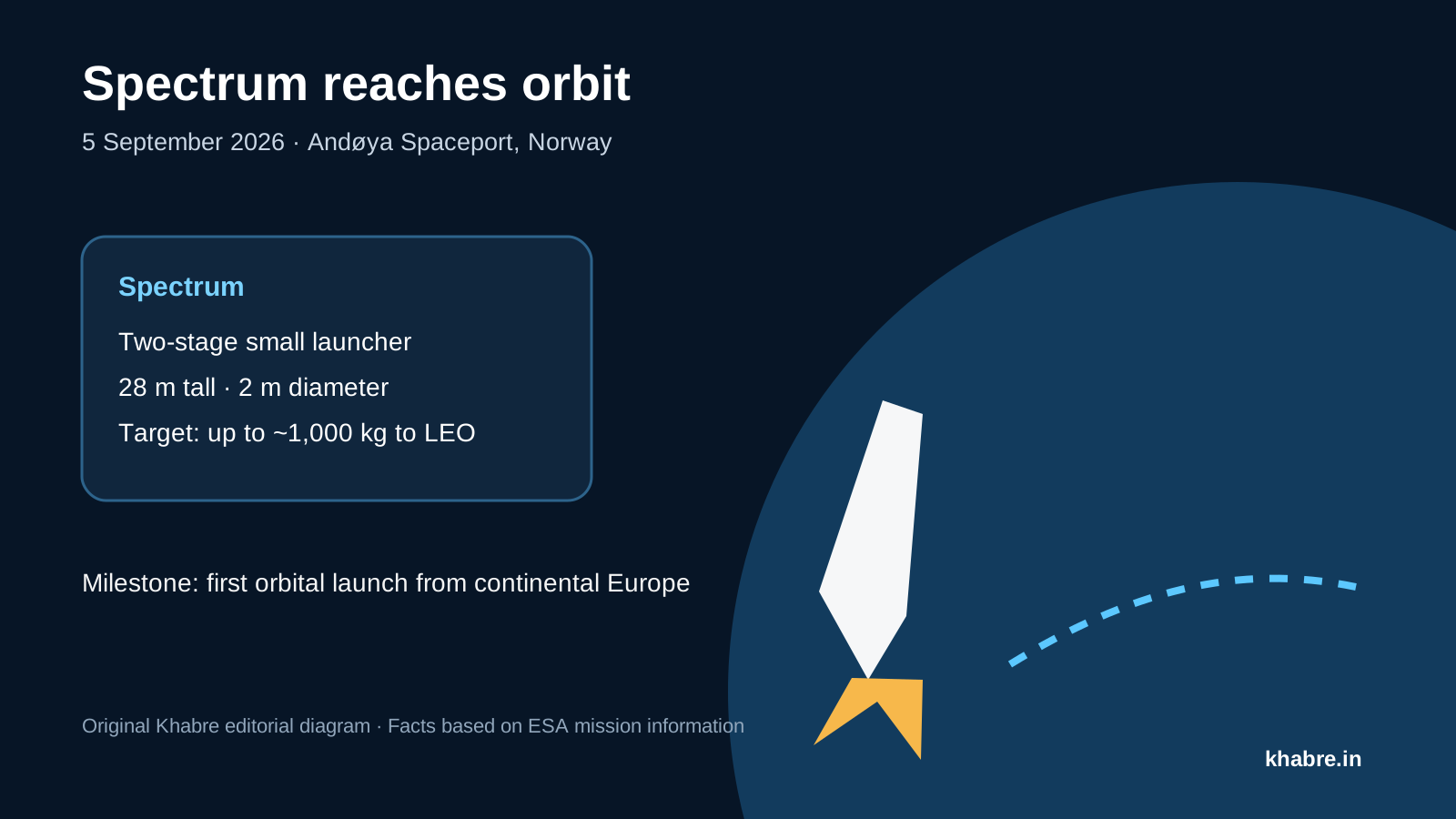
Isar Aerospace's Spectrum rocket reached low Earth orbit from Norway on 5 September 2026, a milestone for Europe's emerging commercial launch sector.
science
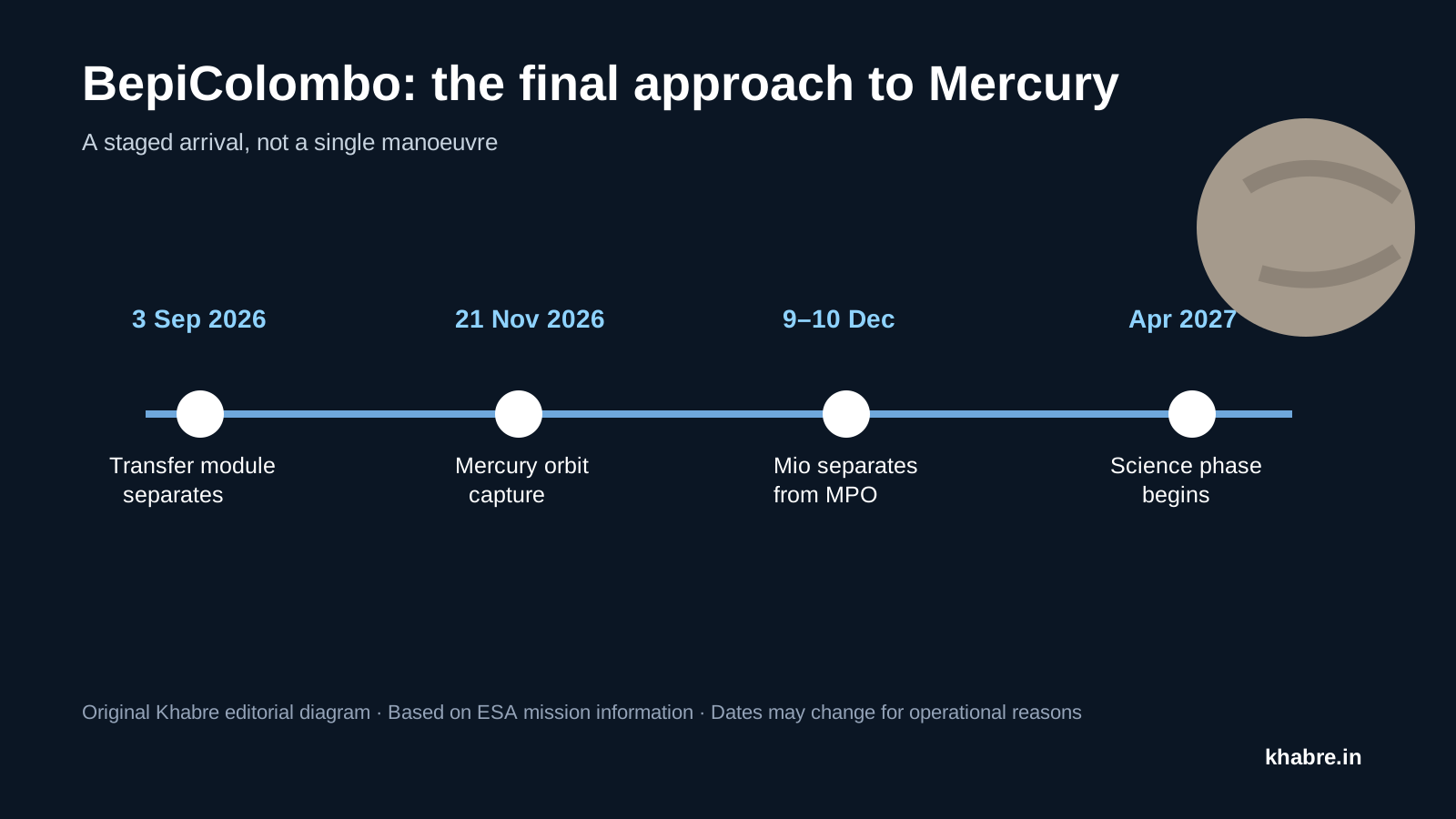
ESA and JAXA's BepiColombo mission has separated its Mercury Transfer Module, beginning a staged arrival that is scheduled to place two science orbiters around Mercury later in 2026.